

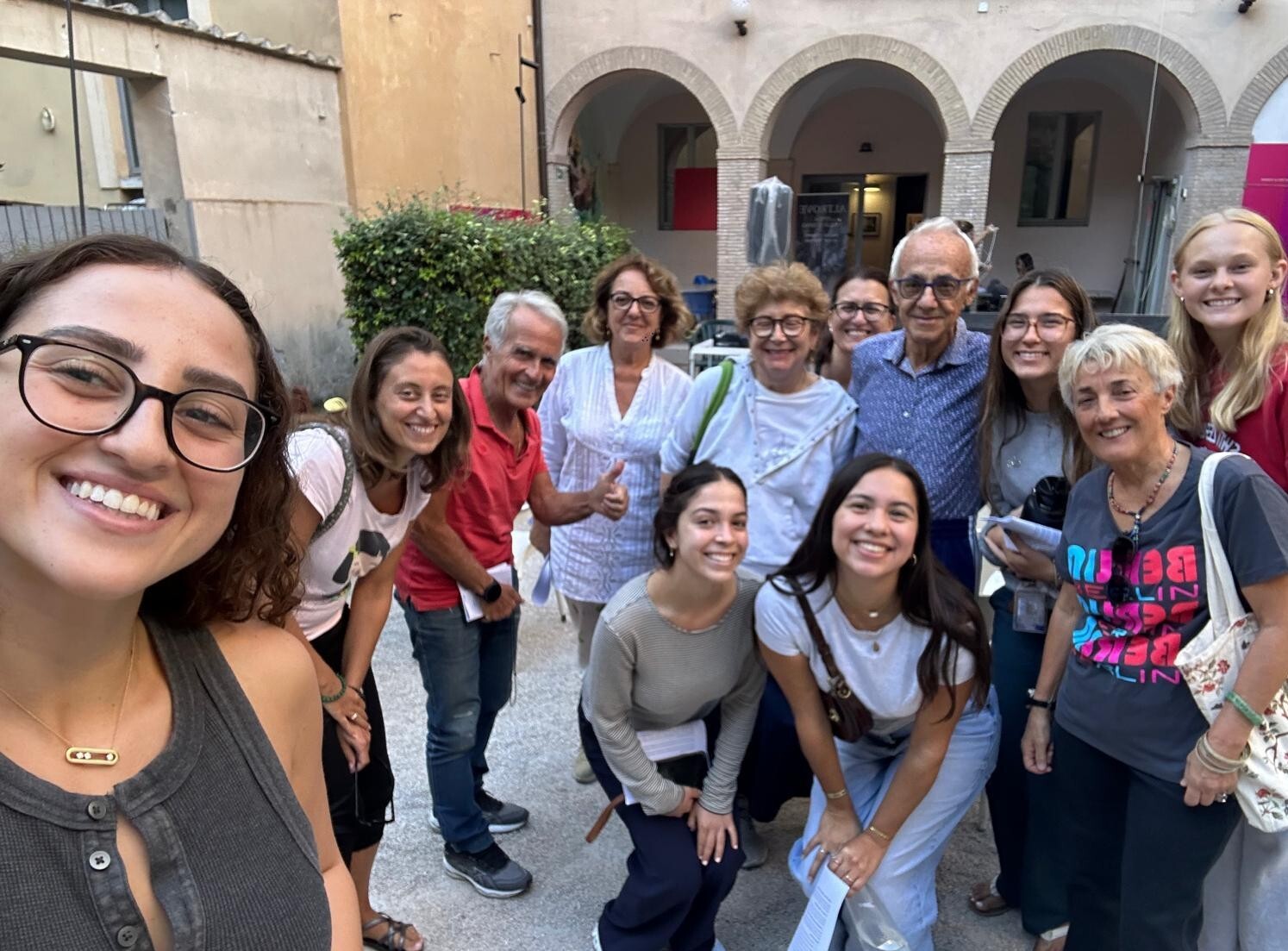

Finding your place at university doesn't always happen in the classroom. Sometimes, it starts with a conversation, a shared activity, or an opportunity to get involved in the local community. At John Cabot University, the Community Service program gives students opportunities to connect with people across Rome through volunteering and community engagement.
Guided by its motto, “I C-A-R-E!” — Community, Awareness, Respect, and Empowerment — the program encourages students to learn from different perspectives, contribute to the local community, and develop a sense of social responsibility. Last year, JCU students contributed more than 2,000 volunteer hours, with approximately 180 students participating each semester.
For JCU student Martina Gaibisso, who is pursuing a bachelor's degree in Marketing and member of the Class of 2027, volunteering became much more than a way to get involved during her first year. After joining JCU's English conversation program, she gradually took on more responsibility and eventually became a site leader. In this article, Martina reflects on how volunteering helped her build meaningful relationships, find a sense of belonging at JCU, and discover her confidence as a leader.
The Sign-Up That Changed My First Year
My first week at JCU was orientation week, and like most of the new students, I didn’t know anyone there.
It seemed to me that everyone around me was making friends instantly, and I was still trying to figure out what my roommates' names were. As you can imagine, I was overwhelmed and feeling lost.
Then I heard about the volunteering program that JCU offers, but more specifically, the English conversation lessons where students volunteer to help Italians practice English. I had never done anything like that before, but it sounded like a low-pressure way to connect and meet new people. I signed up mainly for that reason, not knowing how much I would enjoy it and how much it would impact my life at JCU.
Meeting Giancarlo
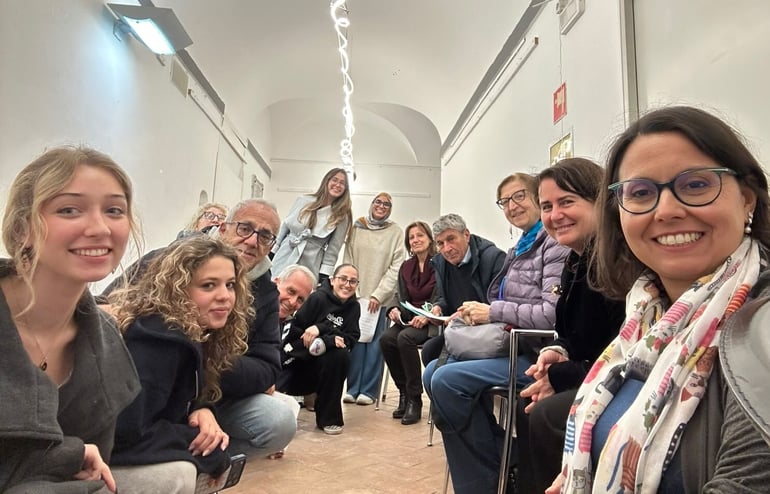
Every week, a group of people comes to practice their English at the Casa Internazionale delle Donne with JCU students. Among them is a man named Giancarlo; he is in his late 60s and has been coming since I started volunteering.
When I met him, his English was limited. Two years later, it has improved so much that our conversations flow more naturally. Watching the progress he has made has been one of the most rewarding parts of volunteering. I obviously didn’t teach him everything, but I am proud and privileged to be a part of his journey.
What I love most about talking with him is his perspective on life. He has an amazing way of looking the world, and I often leave our conversations thinking about things I would never have considered. He is a passionate traveler now that he has retired. He comes to our lessons and sometimes talks about his adventures around the world, which have inspired me so much over the years that I have been looking into a potential career as a flight attendant when I finish at JCU.
Same Side of the Language
There is something special about volunteering with people who come from your country. I’m Italian, and I have lived in Italy my whole life. Therefore, I understand the hesitation and frustration these learners might feel when they are struggling to find an English word or phrase, and they can’t find one. Because of that, I can often explain an English phrase or word by comparing it to something we would say it in Italian, which often makes everything click.
Some of my favorite moments happen when we go completely off topic. Someone starts telling a story that has nothing to do with our activity, then we move on to another story, and soon we are far from where we started.
The funny part is that nobody interrupts. Everyone just sits in silence and listens, fully invested. Those tangents are secretly the best practice, because the learners are speaking naturally, not just repeating exercises.
Other times we pick unusual topics, like strange sports around the world or strange traditions from different cultures. We always end up debating which one we would actually try. These moments make me feel less like a volunteer and more like part of a group of friends having a vibrant discussion.
Becoming A Site Leader
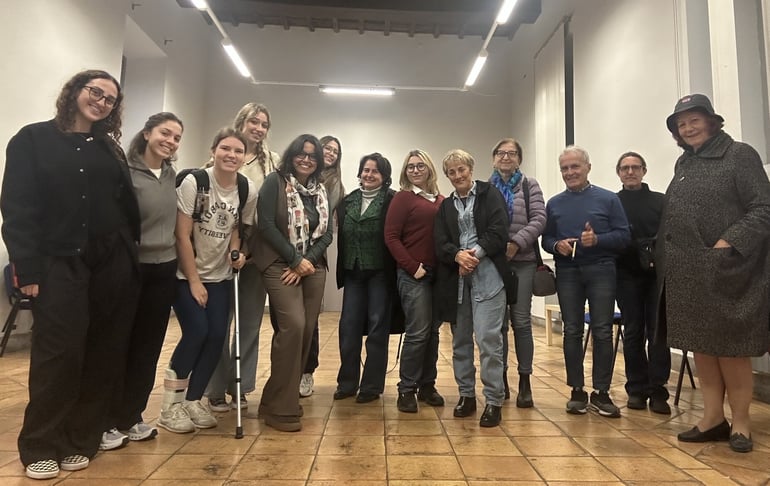
After two years, I became a site leader. I was excited, but I quickly learned it was a bigger responsibility than I expected.
The hardest part was choosing the topics. Each week, I have to find articles or activities that keep everyone engaged while still giving participants a chance to practice speaking with native or very advanced English speakers, like the JCU students. A topic that excites a university student might bore someone who is much older than we are and may have children or grandchildren our age. Therefore, I have to think carefully about what would spark real conversation.
It took trial and error. Some topics worked beautifully, while others fell flat. Over time, I learned to read the room and adjust the activity accordingly.
Leading When You’re Shy
To be very honest, I’m not a naturally confident person. I’m on the shy side, and sometimes speaking in front of a group can be intimidating for me.
As a site leader, I have to guide the whole conversation, and I might have to politely stop someone mid-sentence when they go off on a tangent. Having to correct or interrupt someone was quite intimidating for me at first, not to mention the anxiety I felt when I forgot the translation or definition of a word. Those instances made me question whether I was the right person for the role.
However, the continuity of volunteering helped. Each week it got a little easier, and I realized the group wasn’t judging me. They wanted me to succeed as much as I wanted them to improve. Teaching has done more for my leadership skills than any classroom exercise could, because I had to learn to lead in real time.
Becoming Part of the Community
When I think about why this experience matters so much to me, it comes back to that first week, when I felt like I didn’t belong anywhere yet.
I had signed up mostly because I wanted to meet people, and I never imagined that a weekly English session would become the center of my time at JCU.
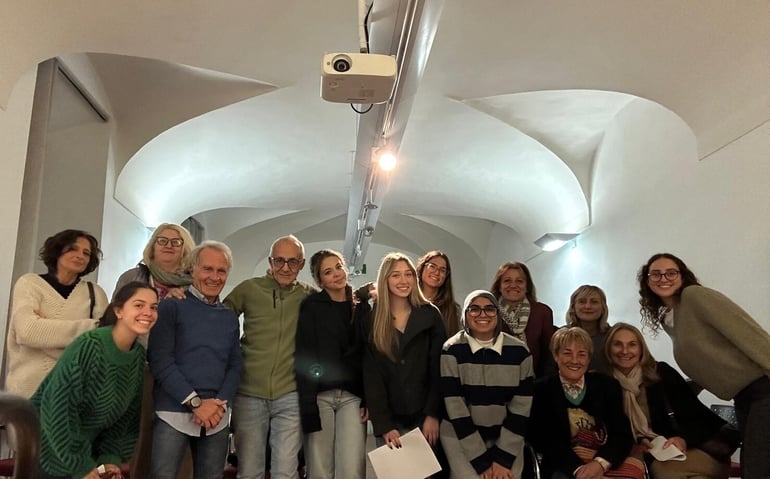
Helping others learn a language changed that. I wasn’t just a student walking between classes. I was someone with a role, familiar faces, and a weekly place to show up. Teaching English gave me a community, and that community made JCU feel like my home.
I plan to stay on as site leader until I graduate. When that day comes, I will pass the torch on to the next student, and I hope they find in it what I did: a reason to show up, people who are glad to see them, and a place that feels like theirs. That shy first-year student who signed up, a few years ago, to meet people will soon be handing over the reins to another JCU volunteer looking for a sense of purpose and belonging.
FAQs About Community Service at JCU
Do I need to speak Italian to participate in the Community Service Program? No, you can participate without speaking Italian. Many JCU students who participate don’t know any Italian or know they know very little, maybe just a few words or phrases that they have learned while living in Italy.
Do I receive a certificate or recognition for volunteering at JCU? Yes! Students who volunteer at least 15 hours during a semester with one or more of JCU's affiliated organizations and attend at least two Classroom Experiences (lectures, seminars, or workshops related to the humanitarian field) can receive an official Certificate of Participation. This certificate recognizes their commitment to volunteering and can be included on their international résumé.
Graduating seniors may also receive a Service Honor Cord in recognition of their outstanding contribution to community service. To qualify, students must have earned the Certificate of Participation at least once during their time at JCU and completed more than 65 volunteer hours through the program.
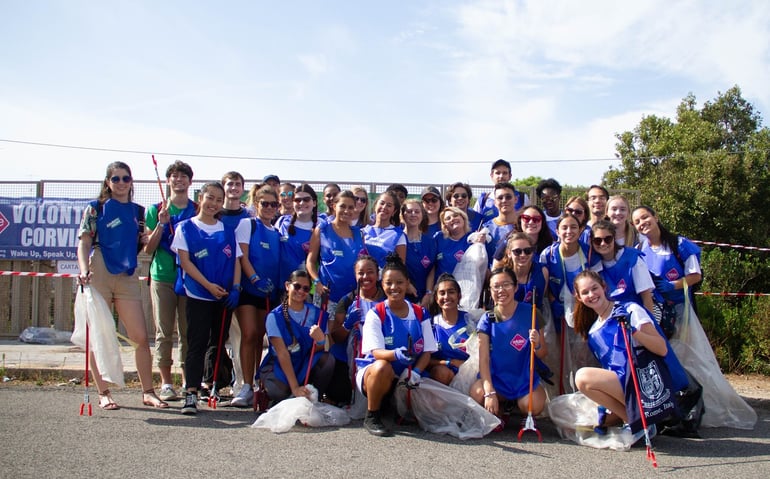
Do What other community service opportunities are available at JCU? Students can participate in a variety of activities throughout the semester, including English and Spanish conversation groups, food distribution, environmental clean-ups, and other initiatives with JCU's affiliated organizations.
How can I sign up for community service opportunities at JCU? Students interested in participating can contact the Office of Community Service, Religious Life and Multiculturalism at jcucommunityservice@johncabot.edu. Information about available volunteering opportunities is also shared with students regularly.
What does a site leader do? Every volunteering activity at JCU has its own site leaders, and the role depends on the activity. In my English conversation group, I choose the weekly topics, find articles or activities that keep the conversation going, and guide the group.
Finding Connection Through Community Service
Martina's experience shows how community service can become an important part of the university experience, offering students opportunities to build relationships, develop new skills, and become more connected to the communities around them. What began as a way to meet people during her first week at JCU became a meaningful commitment that helped her grow personally and take on a leadership role.
At its heart, the JCU Community Service program is about more than volunteering hours. It encourages students to learn from the people they meet, understand different perspectives, and become active members of the communities around them. These experiences offer students an opportunity not only to give back to Rome, but also to grow through the connections they make along the way beyond their academic studies.
Interested in getting involved? Learn more about Community Service opportunities at John Cabot University and discover how you can connect with the wider Rome community while making the most of your university experience.


